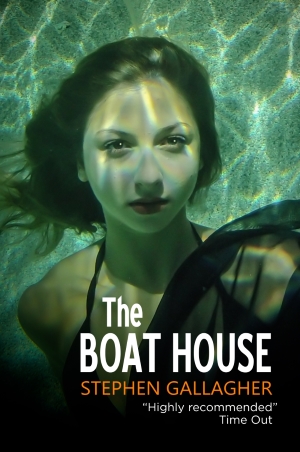
A dark love story, and a disturbing tale of a divided soul. In the days leading to the fall of the Soviet empire, a young woman with a deadly secret slips unnoticed into the West. And when Alina Petrovna first appears in Three Oaks Bay it’s clear that her frail, luminous beauty is likely to cause some ripples in the surface calm of the peaceful resort town. For Pete McCarthy, the boatyard worker who gives her shelter, she’s an enigma. A complex, well-meaning young woman with a difficult past. Someone whose mystery deepens as the season gets under way, and the deaths by drowning begin
Article: Milla, Jude, and The Boat House
Gallagher handles the balance between mundane reality and stomach-turning horror with reassurance and offers a nicely twisted ending to boot. Highly recommended
Nigel Kendall, Time Out
A master of pace and suspense, Gallagher has the dark, neon-splashed imagination of a true original
Glasgow Evening Times
Stephen Gallagher has carved a highly individual niche with his distinctly psychological approach to the genre… The Boat House is a richly layered and absorbing story
Yorkshire Evening Post


On writing The Boat House:
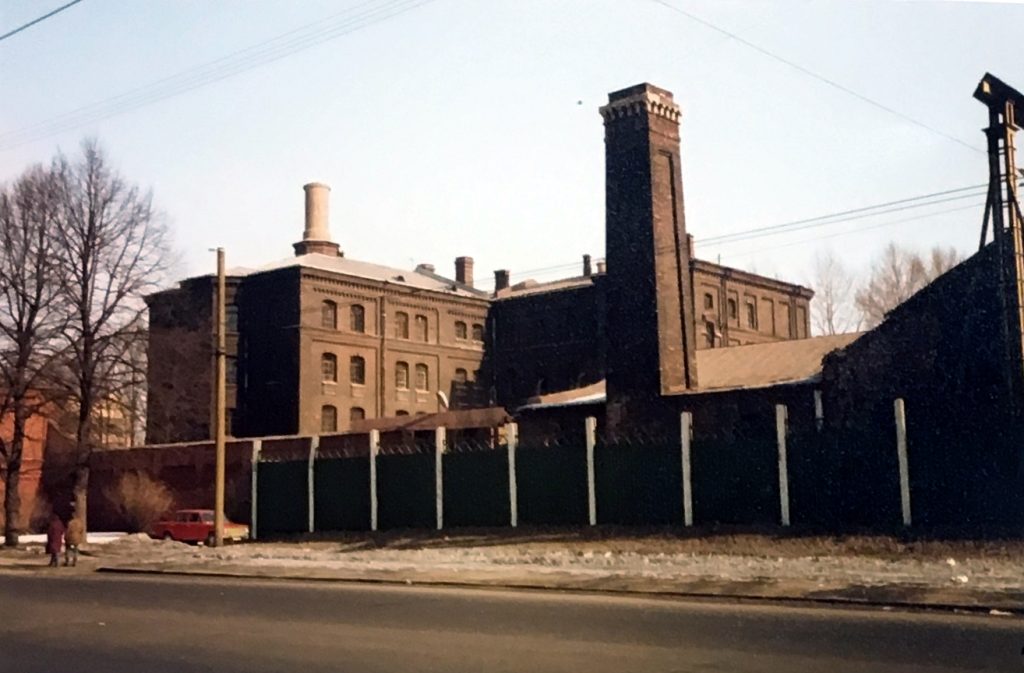
The year was nineteen eighty-four. It’s hard to resist the temptation to describe my visit to Leningrad’s Arsenalnaya Street in the terms of some iron-curtain adventure, but the truth of it wasn’t nearly so exotic. I simply walked out on a clear Sunday morning in March, headed towards the more industrialised Viborg side of the city, and went on for another half-mile or so until I reached the address I was looking for. The place was easy enough to find; I had a map, and the number and the street name were displayed over the main doors of the entrance block. It was a brutal-looking brick edifice with small windows and a tall chimney, set back from the street behind a high wall. I nervously took about half a dozen photographs, and then left. I’d set out with some confidence. The return half-mile felt like the longest walk I’ve ever taken.
This was a Sunday, and because the factories all along the road had closed down until Monday, I seemed to be almost the only person on foot in the area. I hadn’t planned on being this conspicuous. There was a bad moment when, almost at the end where I could turn a corner and get lost in the crowds around the Finland Station, I saw a militia van making the turn and coming towards me at speed. But it went on by.
Number 9 Arsenalnaya Street was the address of Leningrad’s Special Prison Hospital (it’s now the St Petersburg Psychiatric Hospital of Specialized Type with Intense Observation). Originally built as a women’s prison and converted in 1948, it was a place of incarceration for the criminally insane roughly comparable to Britain’s Rampton or Broadmoor. It was here that the state kept its dissidents, on the principle
that disenchantment with the regime was a sure sign of mental instability. Their stays were open-ended, their conditions harsh and punitive. This was pre-glasnost Soviet Russia and I was here to research The Boat House. I’d spent the previous week in Western Karelia, gathering detail and soaking up atmosphere, making the journey through closed borders and checkpoints to this ultimate destination.
I must have been mad. I mean, I’m not even brave.
Within a couple of weeks of getting home I went down with Hepatitis A, courtesy of the kitchen hygiene in the Europiskaya Hotel. This made for a somewhat fevered writing process, but the result, heavily edited with a cooler head, felt exciting and unique.