What was the origin / history of the concept for Eleventh Hour?
There was a British version that came first, and that version has a backstory all of its own.
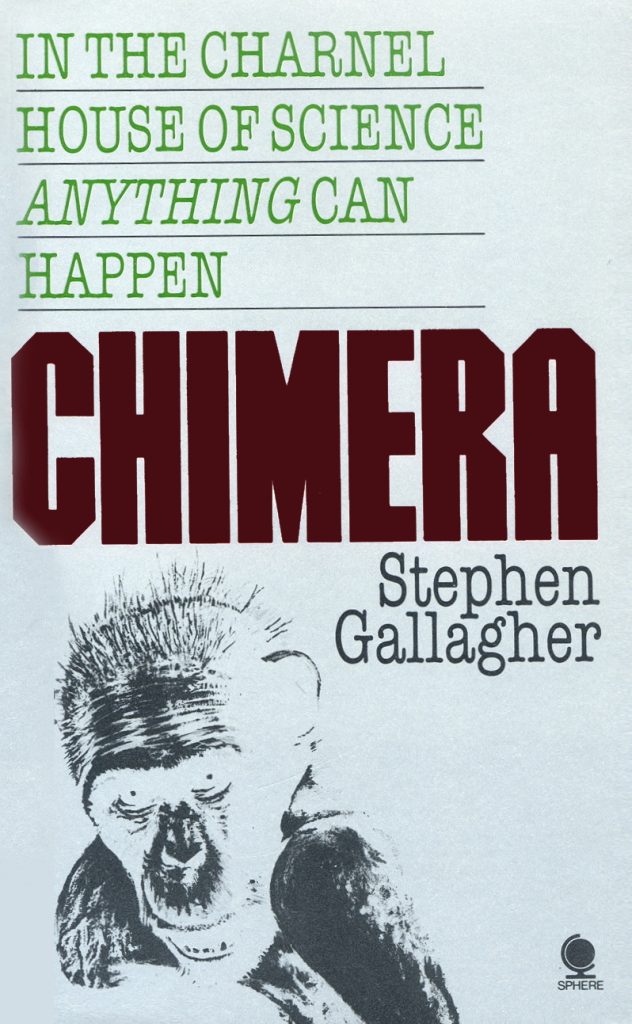
If you don’t count Doctor Who, my first big-break TV sale was a miniseries called Chimera. It was like Frankenstein with genetics and it led to my participation in a Wellcome Trust debate over the demonization of science in culture. I hadn’t set out to demonize anything – in my own mind I was simply using modern tools to access a timeless myth – but I could see how an anti-science message could be inferred from it. A hybrid creature slaughters the research team that created it and then, over the following three hours, a non-scientist investigator unpicks the emotional story that led to the tragedy.
Paul Nurse was on the panel, and suggested afterwards that if I ever wanted to write about real-world science, I should get in touch. The seed of Eleventh Hour was right there, I reckon, but it would be about ten years before I’d get to act on it.
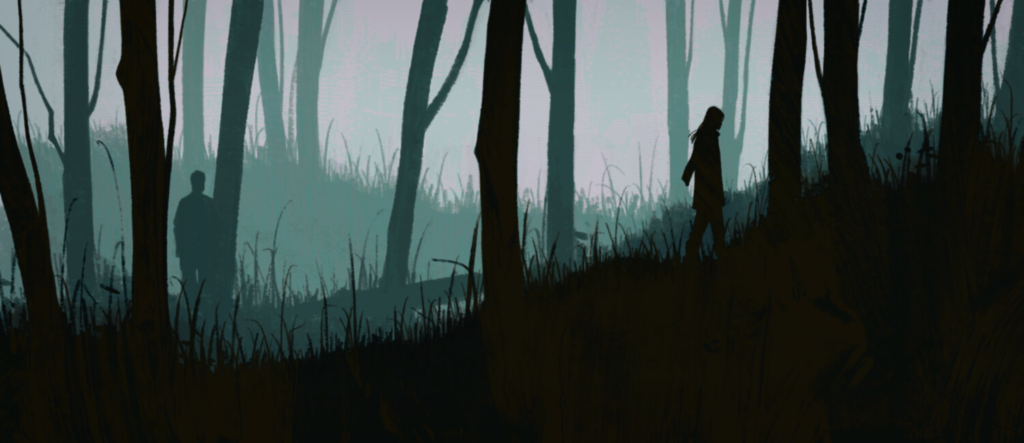
I was at Granada TV meeting with one of the drama department’s development producers, Shefali Malhoutra, having one of those non-specific conversations about possible projects, when she mentioned that her boss was the father of twin boys and was always receptive to pitches that concerned cloning. Well, that was enough to set me off on a rant about how badly the subject was always covered in drama. I wrote a follow-up memo listing all the ways I wouldn’t tackle it, and somehow out of that emerged my own proposal, beginning with the image of all those tiny secret graves in the woods. The police don’t know what to make of it; into their midst strides someone who can.
My pitch for the British show was “Professor Quatermass and Emma Peel keeping science’s house in order”. I was drawing on two of the biggest TV icons of earlier decades. Bernard Quatermass was the scientist hero of groundbreaking BBC serials by Nigel Kneale. The Avengers’ Emma Peel, as played by Diana Rigg, usurped the notion that a woman’s role in a TV drama was limited to that of wife, victim, love interest or eye-candy. Emma Peel was confident, competent, independent, and empowered. The leather catsuits were a bonus. The glamorous aspect of the character worked for both genders, in different ways.
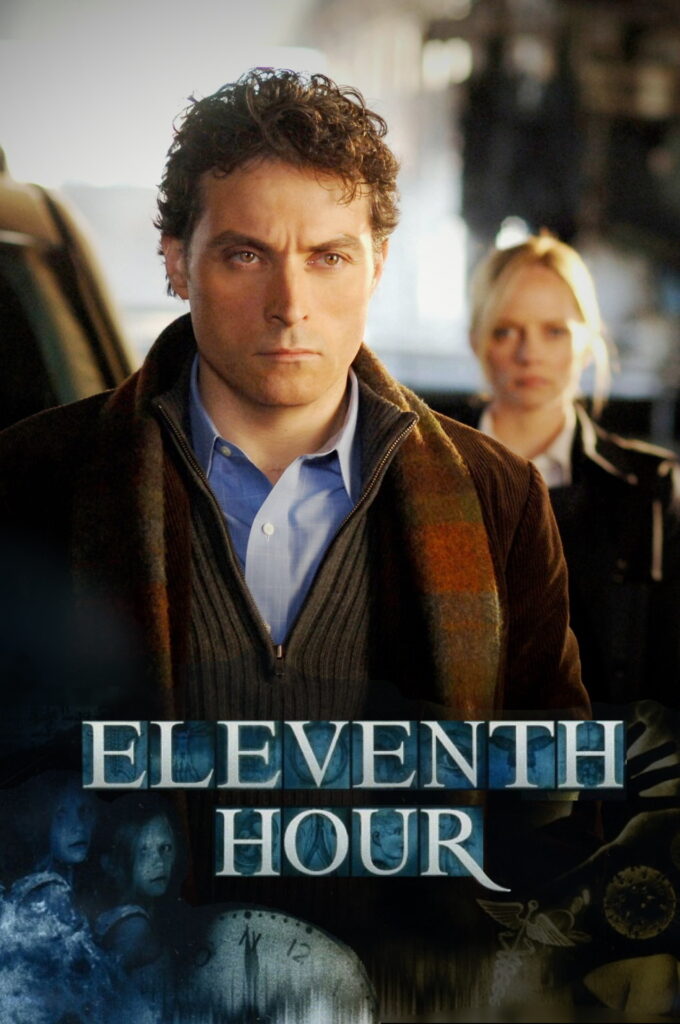
The British Professor Hood, played by Patrick Stewart, was a much older guy than Rufus Sewell’s Doctor Hood. He was an emeritus professor, full of restless energy, his research career behind him but not willing to settle down and sit on committees. He’s given a roving brief to intercede in any science-based crisis to prevent it from escalating into a disaster. In the UK we’d experienced several national situations that showed up politicians’ inability to deal with an immediate scientific reality. The belated measures to deal with foot and mouth disease, denial over the threat of BSE in the food chain, disruption of the MMR vaccination program by the popularisation of badly flawed research. Several outspoken non-government scientists braved political spin and stood their ground on the evidence, eventually to be proved right. It took a certain kind of personality to weather that kind of storm, and that’s how I saw Hood. What if they hired one of those scientists to be their troubleshooter, thinking to bring him onside, only to find him just as outspoken and awkward as ever?
Jerry Bruckheimer bought the show format and scripts for a US remake. I’d fallen out with Granada over their handling of my material and I wasn’t involved in the sale or the subsequent makeover, at least not until the retuned version was largely set by the new production team. They drew me back in and I really liked what they’d done with it. Hood was younger, but that worked; FBI status gave him the necessary gravitas and authority for which there’s no British equivalent. And Marley Shelton’s Rachel was perfect, exactly as originally conceived.
What themes or messages about science was the show intended to have?
It was to be a pro-science show with a scientist hero. The bedrock of the whole thing was that the science had to be actual. This turned out to be hard for some people to grasp. But I’d done my due diligence and I’d looked at science thrillers that had gone before and failed. Medical shows don’t make up their own cures and diseases. Courtroom dramas don’t turn their plots on non-existent points of law. If you want to do science fiction, do science fiction, but Eleventh Hour isn’t that.
This caused friction on the UK production. I was told bluntly that my commitment to scientific probity was damaging to the show’s prospects. My insistence on basing story on solidly researched elements was “letting the tail wag the dog”. Matters reached a head two weeks before shooting, and I walked off the show.
Bruckheimer’s US version was different. Production was up and running before I was drawn back in, but they were re-using my material and following the science-driven principles I’d begun with. JBTV was the company behind CSI, the series I’d always held up as an example of real science driving human stories. With the two new episodes I came to contribute, Subway and Medea, I finally got to write on the show as I wanted it to be.
What themes or messages about scientists was the show intended to have?
That evidence-based thinking is the greatest tool available to the human species, and that to witness it in action is thrilling. Without it we’d still be hiding from lions and pointing at the moon.
I’ll tell you one intended theme that got lost along the way, and that I miss. Man Without a Shadow, my pilot script, was built around the notion that the drive toward human cloning represents a deep-seated male urge to hijack the reproductive process. My would-be cloner was a composite of several real-life charlatans dodging international law and attempting the technology. Someone thought it would be a bright twist to make the cloner a woman with the nickname ‘Geppetto’, who argues that scientific advances justify human suffering. That’s the version that reappeared in the American pilot.
In a memo to the US producers about the second season we were hoping to make (but never did), I wrote:
The ruthless, ‘playing God’ stereotype, arguing that harm can be justified in the name of progress, is a cartoon. Science’s villains are the same recognisably human people as those regular scientists. But they become villains through regular human flaws, not by Nazi logic. They sell out, or screw up. They can bend the truth to suit their paymasters or the policymakers, and call it ‘being realistic’. They can be reckless, they can underestimate danger, they can lie to cover their mistakes, they can take desperate measures to cover their lies. But science’s villains are characterised by their human failings, not by single-minded immoral intent.
Still works for me. I don’t think that a drama in which science goes wrong reflects badly on science. I challenge anyone to witness the carnage in Jurassic Park and not walk out of the theatre thinking, “Making dinosaurs! Fuck yeah!”
Did you use science consultants for the show? If so, who were they?
We did. In the UK our science consultant was Steve Connor, science editor on The Independent newspaper. A good choice – he had an enormous range of contacts and a good sense of story, so he was a great intermediary rather than a source per se. On the US show, Princeton’s Andrew Bazarko was the technical consultant I had contact with over my material. There may have been specialists in other areas consulted for different episodes, but Andrew was our series guy.
What was the process like of working with the science consultants?
Here’s what I wrote in the original show bible:
I’ve written and deleted pages on this but in a nutshell the guideline is, “Don’t just believe any old crap that’s out there, and use our science consultant to help you discriminate between a proven scientific certainty, a strong scientific probability, a mere scientific possibility, or a vague conjecture for which there is very little evidence at all”.
Do that before you build up your story, or you risk building it on sand. We’re here to entertain the audience, not to give them science lectures, but it’s important we don’t spin story out of a ‘fact of life’ that simply isn’t true. Extra vigilance is needed with campaign groups and conspiracy theories where conjecture based on anecdotal evidence is argued with the force of certainty. I can’t sort them out without professional advice and I don’t expect any other non-scientist to.
One of my earliest memos on this subject read:
One of my trains of thought – the major one, really – is about how we can build a production approach to get stories out of real science, as opposed to a piecemeal approach of asking working writers to pitch stories out of whatever pop science they know and half-understand.
If it helps, here’s the method we drew up:
- Land on a sexy subject.
- Identify its dominant hot topic.
- Look for a dramatic handle
- Run the concepts past our science consultant
- Fashion the story out of what you now know
Google is a great friend but it’s also an uncritical and undiscriminating resource, to be treated with caution. It’ll tell you that infinite energy machines are possible but the technology is being suppressed by the vested interests of the Science Establishment. That the real reason for the war with Iraq was that the US needed to get control of a ‘stargate’ portal left behind in the desert by the ancient alien visitors who founded Western civilization. BSE is actually caused by a combination of mineral deficiency and sonic booms. The Bible’s a fraud and Judas was actually Jesus’ twin brother. Low-level radioactive particles can reside in the body with no effect but can be ‘activated’ later in life. Smallpox vaccine is a conspiracy and the disease is preventable by diet and high doses of vitamins.
Interview conducted by Evan Szu, Stanford University, October 2013